What will it take to convince people to get vaccinated against Covid? From free doughnuts to million-dollar payouts, public and private groups are trying it all.
In March, Krispy Kreme was one of the first businesses to roll out a nationwide Covid vaccine incentive, offering a free glazed doughnut to any adult with a vaccination card.
Since then, the company said it has given away more than 1.5 million doughnuts. (The offer still stands through the remainder of the year.)
"We were the first national brand to launch a campaign to show support for Americans choosing to get vaccinated, and we were hopeful that others would join us," said Dave Skena, chief marketing officer at Krispy Kreme.
"So, it's very gratifying to see so many companies, organizations, communities and even state governments encouraging and incentivizing people to protect themselves and others by getting vaccinated."
While some states, like New Jersey and Connecticut, are offering a free beer or nonalcoholic beverage to encourage more people to get vaccinated against Covid, others like Ohio and Maryland have gone much further.
Last week, Maryland held the first of its $40,000 lottery drawings for people who have been vaccinated. There will be 40 consecutive days of drawings for a $40,000 prize, ending on July 4 with a final drawing for a $400,000 payout.
Ohio is also holding a series of drawings for cash prizes, although its "Vax-a-Million" contest ups the ante significantly.
The latest data from the Centers for Disease Control and Prevention shows that about half of the U.S. population has had at least one shot — and yet, the pace of Covid vaccinations has slowed nationwide.
Incentives may become increasingly important to move the needle from here, according to Bob Bollinger, a professor of infectious diseases at the Johns Hopkins University School of Medicine and inventor of the emocha Health app.
"It really depends on what the barriers are that people have about getting vaccinated," Bollinger said. The higher those barriers are, the harder they are to overcome, he added.
A handful of states have reported that vaccine incentive programs have increased local vaccination numbers in some demographics after recent drops.
For its part, Ohio said its vaccination rates doubled in some counties after the state vaccine lottery was announced.
Recent data shows that the gambit might be more effective among certain demographics, but with little downside overall, according to a report by Morning Consult.
The poll of 2,200 adults, including nearly 1,600 people who are unvaccinated, found that men are more inclined than women to say these offers would make them sign up to receive a shot. Democrats, more than Republicans, also said they'd be more likely to get vaccinated if they could get free goods or services and, when broken down by generation, millennials were the most likely to say certain freebies would motivate them to get vaccinated.
An earlier survey by Blackhawk Network found that more than two-thirds of adults said they would accept a monetary incentive ranging from as little as $10 to as much as $1,000. One-third said they would get vaccinated for $100 or less. Blackhawk Network polled more than 2,000 adults in January.
So far there's been little to indicate that a summer of big spending among the elite clubs in Europe will happen. If the failed European Super League breakaway attempt was proof of anything, it was that the football economy is not in a good place. Over a year on, the effects of the COVID-19 pandemic are still being felt, projected and counted, with the game's financial future still unclear. Clubs will have lower budgets to work with, while loans and free transfers will be high on the agenda again.
However, the huge recent changeover of managers in Europe's top leagues should result in some players switching teams. How does Massimiliano Allegri want to shape his Juventus side? What's in store for Real Madrid now that Zinedine Zidane has left? And it's hard to believe that Jose Mourinho joined Roma without the promise of being able to bring in new players. Then there are perennial high spenders Paris Saint-Germain, who might end up cutting the Mauricio Pochettino era short if they let him return to Tottenham Hotspur.
All these changes in the hot seat could stir something in the transfer market. While the days of €100 million-plus deals being done are probably over for the time being, there still are bargains out there.
Liverpool's €41.5m capture of RB Leipzig defender Ibrahima Konate and Leicester's imminent €25m recruitment of Lille midfielder Boubakary Soumare -- the latter of whom appears a particularly shrewd signing -- shows that there still are opportunities to be had.
The CEO of a midsized, top-tier club in continental Europe told ESPN: "We are going to add to our squad this summer. What I can say for certain: those we do sign, will not become our top earners. The wages have to come down, there's no other option. Many clubs are desperate to get rid of their best-paid players, but it's difficult. Very difficult. Even on loan."
For the majority of clubs, the plan is about trimming costs. In January, we saw examples of this as Arsenal let their highest-paid player Mesut Ozil (earning a reported €375,000 a week) leave on a free transfer despite having six months left on his contract. Sokratis Papastathopoulos and Shkodran Mustafi followed suit and the club opted to take the short-term financial hit to move them on.
Decisions over new deals for 2022 will not be taken lightly and, as the CEO says, those who move clubs may have to accept lower wages and shorter contract lengths.
Clubs in the top five European leagues completed 1,422 deals worth €3 billion in the summer of 2020, down from €5.5bn in summer 2019. Chelsea spent over €240m to sign six players including Kai Havertz and Timo Werner, Arsenal landed Thomas Partey from Atletico Madrid for €50m, while Napoli splashed €70m to bring in Victor Osimhen, but we may see that figure drop again this year.
In past years, one big move can see the money trickle down -- like Barcelona spending €160m to land Liverpool's Philippe Coutinho in 2018, meaning the Reds signed Southampton's Virgil van Dijk (€80m) and Roma's Alisson (€75m) with the proceeds. Now, the COVID-19 financial crisis means clubs aren't able to move on big players and reinvest in the same way.
Barca's rivals Real Madrid would love nothing more than to sign Erling Haaland or Kylian Mbappe, but their financial situation means a free transfer for Bayern Munich's David Alaba might be as high profile as they get this summer. And that will only balance out if they lose the wages of either Raphael Varane or Sergio Ramos. Make no mistake, Alaba is a quality signing, but Madrid are hampered by the high wages of the likes of Gareth Bale, Isco and Eden Hazard and need to move players on before they can bring anyone in.
Messi is clearly the most high-profile player to still be available on a free, with Man City and PSG the most likely to sign him if he leaves Barcelona, but AC Milan goalkeeper Gianluigi Donnarumma is arguably more in demand given he's 22 and has his whole career ahead of him. Every top club in Europe will be circling the Italy international before he makes his decision.
Using the loan market well will also be key. A player like Real Madrid midfielder Martin Odegaard could be of great interest if Zidane's replacement decides he's not part of the rebuild, and the Bernabeu club may be able to offer up the likes of Bale, Luka Jovic and Brahim Diaz once more.
While there will always be a market for players who want to play first-team football again, there may also be another type of loan: one designed to move a player's wages off the books until the financial crisis eases in a year or so.
For example, Manchester United could look at letting goalkeeper David de Gea (who earns a reported €400,000 a week) depart on loan as they have Dean Henderson ready to take over as No. 1. Elsewhere, Arsenal right-back Hector Bellerin has been promised an exit this summer but the club may not be able to offer him more than a loan to Real Betis, while Barcelona's Miralem Pjanic could be another to go this route after a disappointing season at Camp Nou and another three years on his contract.
The hope would be that a player's transfer value increases with some good performances on loan -- as United have managed to do with Jesse Lingard at West Ham -- while also saving them money in the short term. But it's not without risk.
Looking outside the norm
In times of crisis, it pays to have a creative, accomplished scouting team. Unearthing players that are still on a fraction of a Premier League or Serie A wage is sound economy. Even a scarcely used Premier League squad player would earn more than a new arrival from a "development" league would demand or expect.
Just as West Ham found success by looking in the Czech Republic -- the combined €26m they spent to sign Tomas Soucek and Vladimir Coufal is hard to beat for value -- there are other less-heralded countries that are worth studying closer too.
One chief scout from a club in one of Europe's top five league told ESPN: "We've targeted Denmark and Poland as particularly interesting markets. Players from those leagues tend to adapt well to the football we play. Poland have some really interesting youth players coming through, and now because of the challenging financial state of Polish football, they are starting to get playing time at senior level as well. And they aren't costing a fortune."
As for Denmark, he added: "Look at their U21 side, it's one of the best in Europe. They went through to the Under-21 European Championship finals in June with a 100% record [in the group stage], even beating that great France team. It says a lot. In the domestic league, nobody seems too bothered about giving playing time to 17- and 18-year-olds. FC Nordsjaelland even field first XIs with an average age of less than 20. It's incredible."
Of course, the implications of work-permit restrictions post-Brexit means some of these markets are off limits for the Premier League, but clubs on the continent have already seen an opportunity. By trawling the smaller leagues for talent, they can offer a gateway for these players to make an eventual move to the Premier League.
The sporting director said: "We can already feel some kind of Brexit effect. Players from Scandinavia, Eastern Europe, and further away, have always seen us as a steppingstone for England, but after Brexit it becomes an even more interesting business opportunity for us."
play
1:27
Jan Aage Fjortoft sets the stage for a big summer transfer window involving Borussia Dortmund star Erling Haaland.
Which players could be on the move?
Clearly every club in Europe would want to sign star players like Borussia Dortmund's Haaland (€180m), PSG's Mbappe (€150m) and Tottenham's Harry Kane (€150m) but the chances of anyone being able to afford this kind of fee is very low. Therefore, clubs will have to look a bit lower down the pyramid.
With funds raised from letting players go, and perhaps the deep pockets of an owner, some clubs might be able to spend relatively big on transfer fees but you can probably cap that at between €80m-€50m.
Jadon Sancho, Dortmund - €80m: The winger enjoyed an excellent second half to the season as he played a key role in Dortmund's sealing of a place in the Champions League and in their victory in the DFB-Pokal final. Dortmund seem more inclined to listen to offers this summer, with Manchester United most keen, and the 21-year-old Sancho is one of the few who can justify such a big transfer fee.
Declan Rice, West Ham - €70m: The England international has kept doing what he does best: shielding the defence and bringing stability to the centre of midfield. There are a few players who can perform defensive midfield duties as well as the 22-year-old, which is why both United and Chelsea are very interested.
Jules Kounde, Sevilla - €70m: One of the best young centre-backs in world football, Kounde is a great fit for a top club who builds from the back. His contract expires in 2024 and Sevilla would require a big fee in order to let him go.
Jack Grealish, Aston Villa - €70m: Creative and entertaining, with a touch of arrogance, Grealish is contracted to his boyhood club for another four years, but he has wonderful potential and Manchester City have been linked.
Eduardo Camavinga, Rennes - €60m: The 18-year-old's development has seen him courted by every club that can possibly afford him, with Real Madrid favourites. But he has reportedly told Rennes that he won't sign a new contract (his terms expire in 2022) and is keen to stay in Ligue 1, possibly with PSG.
play
0:44
Steve Nicol says Raphael Varane is still an asset for Real Madrid despite his inconsistent form this season.
The second tier of transfer signings could come at around €50m-€25m
Raphael Varane, Real Madrid - €50m: The France international has not quite been as dominant for Real Madrid last season as we've grown used to. With one year left of his contract, the club may sacrifice him to fund their rebuild.
Houssem Aouar, Lyon - €45m: Despite having a mixed season for Lyon, Aouar remains an exceptionally talented attacking midfielder. A player with the qualities and personality to slot straight into a European giant.
Max Aarons, Norwich - €40m: The energetic right-back hardly ever has a poor game, and though newly promoted Norwich still offer a respectable platform for top-level football, that might not be enough to fend off interest from the traditional top clubs.
Nikola Milenkovic, Fiorentina - €35m: A commanding centre-back who's particularly strong in the air, defends and attacks set pieces well. The Serbia international's contract expires in 2022 and he's still only 23 so has plenty of room to develop.
Yves Bissouma, Brighton - €30m: The midfielder had an outstanding season with Brighton and is on the radar of a number of top clubs, including Arsenal and Liverpool. He covers a lot of ground, wins tackles and is a fine ball-carrier.
play
1:44
Gab Marcotti explains how Harry Kane may have painted himself into a corner as he eyes a move away from Tottenham.
The real bargains could come from €25m and below, which are going to be hardest to find.
Remo Freuler, Atalanta - €25m: The Switzerland international might not be the most credited for the gradual ascent of Atalanta over the past years, but few defensive central midfielders offer more in terms of energy, graft and effective pressing. With just one year left to run on his contract, the 29-year-old could be available for significantly less than the fee such a player would usually attract. A fine European Championship could see his stock rise even further.
Sergio Roberto, Barcelona - €25m: Although mostly ignored by Ronald Koeman during the past season, the versatile midfielder/right-back could still deliver to a high standard elsewhere. The 29-year-old is one La Liga appearance shy of his 200th for Barcelona, which tells its own story.
Jonathan Bamba, Lille - €25m: The exodus from title-winning Lille has already started and highly influential Jonathan Bamba might be the next out of the door. As a left winger who likes to cut in on his right foot, he is excellent at taking on opponents. But, at 25 years of age, he might not command the kind of transfer fee that Lille initially would have hoped.
Joachim Andersen, Lyon - €20m: One of the few Fulham players that can look back at a fairly respectable season on an individual level. Despite his loan spell ending in relegation, Andersen showed fine defensive and "constructive" abilities, especially in terms of playing out from the back. Given the state of the transfer market and the general perception that the French club seem to prioritise other central defenders, it's unlikely that Lyon can expect more than the €24m they paid to sign the player back in 2019, despite reported interest from Tottenham).
Federico Bernardeschi, Juventus - €15m: An Italy international winger who's never settled properly into the Juventus first XI following his controversial move from archrivals Fiorentina four years ago. He's still a fine combination player on the final third and with his confidence restored, he'll get back to scoring stunning efforts with his left foot.
Concern over unexpected bills was one of the reasons respondents in a U.S. survey gave for hesitation about getting the shot.
Overlooking the Washington Monument, encouragement to get vaccinated. Jacquelyn Martin/Associated Press
When Paul Moser considers getting a coronavirus vaccine, he also thinks about his outstanding medical debt: $1,200 from a few urology visits that he has been unable to pay off.
Mr. Moser, a 52-year-old gas station cashier in New York State, has friends who were surprised by bills for coronavirus tests, and worries the same could happen with the vaccine. For now, he’s holding off on getting his shot.
“We were told by the legislators that all the testing was supposed to be free, and then surprise, it’s $150,” he said. “I agree it’s important to get vaccinated, but I don’t have a sense of urgency around it.”
Congress passed laws barring pharmacies and hospitals from billing patients for coronavirus vaccines. Signs at vaccination sites advertise that the shot is free. From the beginning, health officials and government leaders have told the public it won’t cost anything. And there have been few reports of people experiencing charges.
Even so, some unvaccinated adults cite concerns about a surprise bill as a reason for not getting the shot. Many of them are accustomed to a health system in which the bills are frequent, large and often unexpected.
A recent Kaiser Family Foundation poll found that about a third of unvaccinated adults were unsure whether insurance covered the new vaccine and were concerned they might need to pay for the shot. The concern was especially pronounced among Hispanic and Black survey respondents.
“The conversations we have are like: ‘Yes, I know it’s good. Yes, I want it, but I don’t have insurance,’” said Ilan Shapiro, medical director of AltaMed, a community health network in Southern California that serves a large Hispanic population. “We’re trying to make sure everyone knows it’s free.”
The confusion may represent a lack of information, or skepticism that a bill won’t follow a visit to the doctor. Liz Hamel, director of survey research at Kaiser, said it could reflect people’s experience with the health system: “People may have heard it’s available for free, but not believe it.”
Congress has tried to protect patients from bills for coronavirus vaccines and tests. Early in the pandemic, it mandated that insurers waive co-payments and deductibles for both services, and set up a fund to reimburse doctors seeing uninsured patients.
Even so, patients found themselves facingbills for testing — some for over $1,000. Some doctors billed uninsured patients for tests rather than the new, federal fund. Others tacked on unexpected fees and services to the testing visit.
The rules for vaccine billing were made even stricter. To become vaccinators, doctors and pharmacies had to sign a contract promising not to bill patients for shots.
The stronger protections appear to have worked. While many patients have encountered coronavirus bills for testing — The New York Times has documented dozens of cases in bills submitted by readers — there have been only a handful involving vaccines.
Still, some unexpected charges have slipped through: Patients in Illinois, North Carolina and Colorado have mistakenly received vaccine bills. In all cases, vaccine providers reversed the charge and apologized for the errors.
The federal government has received some complaints about unexpected charges, and recently warned doctors against billing patients.
Surprise bills for coronavirus vaccines, tests and other medical care can leave an impression on patients. Americans with medical debt are more likely to skip needed care than people who hold other types of debt, like outstanding credit card bills or student loans, according to a 2013 study by Lucie Kalousova, an assistant professor of sociology at the University of California, Riverside.
“For someone who has incurred medical debt, they may be told by the media and everyone else that the vaccine is cost-free, but they’ve also had this very negative, prior encounter with the medical system that has created feelings of mistrust,” she said.
Some patients who worried about the cost of a coronavirus vaccine said they always expect a bill to follow a doctor’s appointment. They cited stories from friends or family members who ended up with expensive coronavirus testing and treatment bills, and wondered why the vaccine would be any different.
“This is America — your health care is not free,” said Elizabeth Drummond, a 42-year-old mother in Oregon who is unvaccinated. “I just feel like that is how the vaccination process is going to go. They’re going to try to capitalize on it.”
It’s also possible that survey research overstates how many Americans fear getting a surprise vaccine bill. When The Times, through Kaiser’s help, conducted follow-up interviews, some poll respondents who voiced this concern said it didn’t actually matter much to them.
Instead, they said they responded that way to express frustration with the vaccine or the wider American health system.
“The cost is the smallest detail,” said Cody Sirman, a 32-year-old who works in manufacturing in Texas and who has decided to go unvaccinated. He said he wouldn’t mind paying for the vaccine if he trusted it — but he doesn’t: “I think the vaccine is a complete sham. It was just a way to see how much control the government can have over the population.”
A public bus turned mobile vaccination clinic in Foley, Minn., this month. Health officials are finding inventive ways to make getting a shot simpler, yet it’s clear that some reluctance is a result of other factors.Liam James Doyle for The New York Times
For many, the potential cost of a vaccine is only part of a constellation of reasons for remaining unvaccinated. It can often be hard for pollsters to know — or even patients to identify — the decisive factor. Separate research from the Census Bureau last month found that Americans were more worried about vaccine side effects than about potential charges.
“Most people aren’t saying they’re just concerned about one thing; it’s usually a lot of things,” said Ms. Hamel of the Kaiser Family Foundation.
Tiffany Addotey, a 42-year-old school bus driver in North Carolina, does cite a concern about cost. That stems mostly from her experience trying to get a coronavirus test.
“It concerns me that some places were charging like $200 for coronavirus tests,” she said. “I didn’t pay. I went home. I have enough bills as it is.”
There are other things that concern her, like the safety of the vaccine given its fast development, as well as the recent Johnson & Johnson vaccine pause.
When Ms. Addotey was informed that federal law makes the vaccine free for all Americans, she responded, “So I’ll just have to pay my co-pay?”
Learning that it really would be free, with no co-payment, “helped a little bit,” she said. But it wasn’t enough to put her mind at ease about getting vaccinated, at least not yet.
“I’m going to try and wait for it to be on the market a little longer,” she said. “I feel like I will get it, after a little more research and a little more time.”
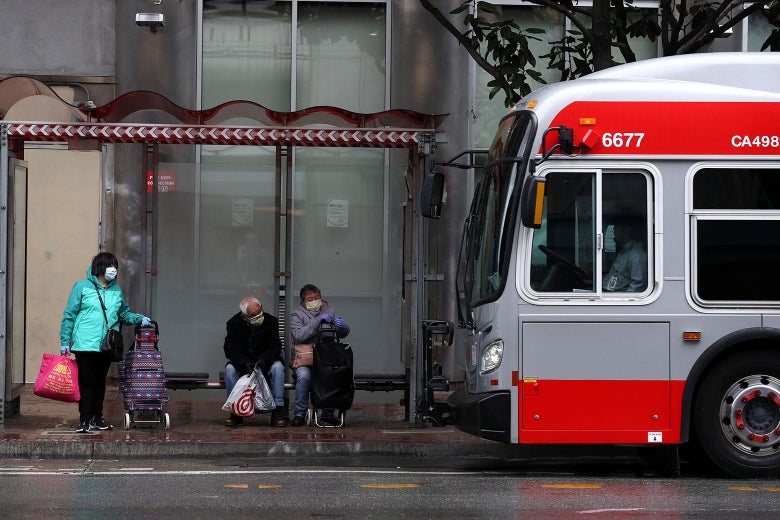
The board of LA Metro, which runs the buses and subways in Los Angeles County, met on Thursday to consider a radical idea: making transit free. The agency has approved a pilot program that will waive fares for K-12 and community college students this summer and for low-income riders next winter. In 2023, Metro will decide if the remaining riders get to ride free, too. That would give Los Angeles the largest free transit system in the world.
More than two hours of public comment preceded the meeting, and most of the speakers were not fans of Metro’s incremental approach. They were against the agency asking for “a public attestation of poverty.” “Any effort to impose a means test is in fact a form of racial discrimination,” one said. Another said: “It’s an apartheid system on its face.” In short: Free transit now!
There’s something in the air. Many U.S. cities waived bus fares during the pandemic, including New York City, Chicago, and Los Angeles—where buses are still free and will remain so until the pilot begins. Kansas City was already getting rid of fares on its buses before Covid. San Francisco supervisors want to make transit free this summer. Making the MBTA free is a big plank in the platform of Michelle Wu, one of the favorites in next year’s Boston mayoral election. The leading candidate for Manhattan borough president wants free city buses in New York, too.
Freeways are free once you’ve bought the car—why shouldn’t transit be free once you’ve bought a pair of shoes? Proponents say universal free transit will help the poor, end the carceral cycle of fare evasion, avoid the stigma and inefficiency of means testing, and boost ridership.
Unfortunately, on that last point—getting more people more places without cars—the prospects for free transit do not look so good.
Los Angeles is in some ways the perfect large city to experiment. In the American Prospect, Claire Wang offers an excellent rundown of the case for free transit in the Southland. Seventy percent of county riders are low-income, so even a universal subsidy would be fairly well-targeted. After the pandemic’s onset, Metro fare revenue dropped from 17 percent to just 4 percent of its operating budget. “We have a moral obligation to research and implement a fareless transit system,” Phillip Washington, LA Metro’s recently departed CEO, told the Prospect. “In the long term, transit should just be like library services or fire department services.”
The primary difference between a bus and a fire truck in Los Angeles, however, is not that one is $1.75 and one is prepaid by taxes. It’s that a fire truck comes when you need it. According to the All Transit Gap Finder, a comparative tool that ranks cities based on service in densely populated neighborhoods, more than 60 percent of L.A. County households are underserved by transit relative to their density (rising to 70 percent in the City of Los Angeles). The comparative figure is 18 percent in Chicago and 24 percent in Washington. How free is free transit if you have to spend an hour a day waiting for the bus?
“I’m not sure free fares are the best investment from the point of view of liberating large numbers of low-income people—only those who already live where transit is already useful,” said Jarrett Walker, a transit planner based in Portland, Oregon. “I’ve heard people describe the free fare movement as being a movement for free, terrible service, and that’s how the trade-off ends up working if you expect this to happen inside the budget of an impoverished American transit agency.”
On the one hand, it would be disingenuous to pretend Los Angeles straphangers must choose between free service and frequent service: The agency’s budget is almost $8 billion, and it spends many times its bus budget on capital projects and highways—funds that could easily be reapportioned to bulk up its transit offerings. It spends more than $100 million a year on police—the very police whose discriminatory conduct provides the strongest justification for getting rid of fares!
“We don’t think of it as a trade-off at all,” said Channing Martinez, an organizer with the Los Angeles Bus Riders Union, which is pushing for free fares for all. “They could give up one of their 30-year, 40-year capital projects and double, triple the service.”
On the other, a service-for-fares bargain was exactly what was proposed at last summer’s announcement of the free transit pilot, which was paired with bus service cuts of 20 percent. Only one-time stimulus from the federal relief bill and sustained pressure from activists got those buses restored. And the status quo isn’t very good. As the Gap Finder attests, what passes for regular service in Los Angeles would appall riders in Chicago or Washington, D.C.—to say nothing of London or Tokyo.
Low-income riders do use transit more once fare discounts are offered, observed Steven Higashide, the research director at the think tank Transit Center and author of Better Buses, Better Cities. He pointed to an MIT study that showed that low-income residents in Boston with discounted CharlieCards took about 30 percent more trips, especially for health care visits. (There are many more studies of free transit in Europe, but the continent’s excellent service and high cost of car ownership make them dubious points of comparison.)
But those same riders also overwhelmingly said reliability was a bigger concern than affordability. And that’s just among people who ride now. “For millions more people the barrier might be the bus doesn’t even go to their doctor’s office, or they can’t rely on it getting there when the schedule promises,” Higashide said. “People won’t have true freedom of mobility unless there is twice, three times, four times as much service as what exists today.”
Riders say they want better service, not cheaperservice.
The competition between free fares and better service is more acute in cities like San Francisco, where transit is not considered the mode of last resort and fare revenues make up a greater share of the bottom line. There, even with Muni service reeling from pandemic-era cuts, city supervisors moved to abolish fares over the summer using federal relief funds. They sparred with SFMTA chief Jeffrey Tumlin, who cautiously argued for a focus on restoring service. (He was more direct on Twitter a couple years ago: “If we have $X to improve transit, are our goals better served by eliminating fares or improving service? If you want to spend public $ to buy down fares, target those for whom fares are an obstacle.”) Mayor London Breed vetoed the supervisors’ resolution.
That trade-off is also at work in Boston. Laurel Paget-Seekins, who recently left a post as assistant general manager for policy at the MBTA, thinks abolishing fares is not the best use of the agency’s limited budget. “The cost of taking transit for low-income people is not just the fare,” she explained. “It’s their time. Obviously, they need to be able to pay the fare, but we shouldn’t waste their time by making them wait for the bus for an hour.”
Most transit experts support targeted discount programs for low-income riders, like the one operated by King County, Washington, which runs transit service in Seattle. They also admit they haven’t done a great job helping people access such programs—a point in favor of a “free school lunch” analogy; benefits are only good if people can get them. That’s a particular concern in Los Angeles, with its large population of undocumented people who might not have or want to share financial paperwork.
In cities with more wealthy riders, though, free transit isn’t just a regressive redistribution of tax money—it’s also not clear how many high-income riders would get on board. In Boston, for example, of MBTA pass holders given free access to the city’s bus network before COVID, 40 percent never rode a single bus. If free buses can’t capture subway riders, why would they lure drivers?
What’s true in Boston is true nationally: Riders say they want better service, not cheaper service. And that may underestimate the preference, because so many low-income people have been pushed out of close-in, well-served neighborhoods where transit works. They don’t think of themselves as straphangers anymore; free transit means little when the bus is a mile from your house.
Well before the pandemic cratered their ridership, American transit agencies were in crisis. Los Angeles had fewer riders in 2016 than in 2006 despite a growing population and billions spent on new transit projects. According to a 2018 study, that decline had an obvious culprit: Angelenos were switching to cars.
In other words, transit in Los Angeles is losing riders to a better option, not a cheaper one. Then again, if riding is free, at least Angelenos will be getting what they pay for.
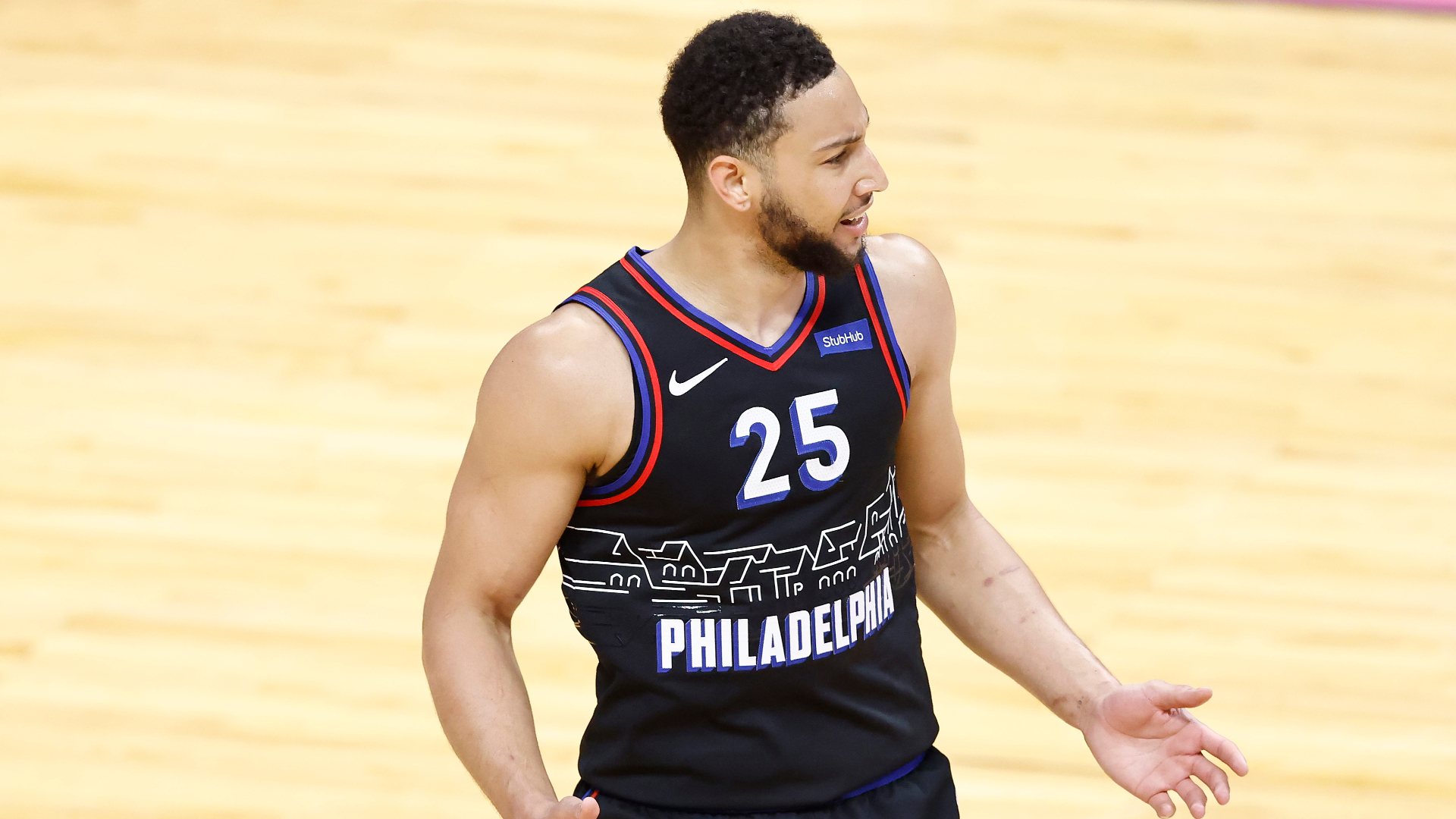
The 76ers' chances at sweeping the Wizards disappeared with every Ben Simmons free throw on Monday.
Philadelphia, looking to sweep the Wizards and move onto the second round of the NBA playoffs, saw that opportunity diminish after Joel Embiid left the game in the first quarter with a sore knee. Following Embiid's exit, Washington targeted Simmons in the fourth quarter, choosing to send him to the free throw line in a new-age Hack-a-Shaq strategy.
Entering the game, Simmons was 0 for 9 from the charity stripe in the series. He was 1 of 3 in the game before the Wizards committed fully to fouling him in the fourth quarter. He split each of his four trips to the free throw line (4 for 8) to eventually end up 5 for 11 on the evening.
It ultimately resulted in Washington's first win of the series, sending the game back to Philadelphia with a 122-114 win for the Wizards. The last time the Sixers swept a team was in 1985, against Milwaukee.
Philadelphia coach Doc Rivers scoffed at the notion he would remove Simmons from the floor as he continued struggling at the charity stripe:
"You want me to take Ben Simmons off the floor? No. He's pretty good," Rivers said. I'll pass on that suggestion."
Rivers also had no issues with the Wizards' strategy to keep harassing the point guard, who entered the game shooting 61.3 percent from the free throw line.
"Obviously that's what they're going to do," Rivers said. "That's what they should do. And I'm OK with that."
Despite his free throw struggles, Simmons finished the game with a double-double: 13 points and 12 rebounds. Tobias Harris led all 76ers with 21 points and 13 rebounds. Washington's Bradley Beal had a game-high 27 points, while Russell Westbrook enjoyed another triple-double with 19 points, 21 rebounds and 14 assists.
Simmons wasn't the sole reason Philadelphia lost on Monday, but that didn't stop Twitter from breaking out the jokes and hot takes:
Ben Simmons is walking to the free throw line like he’s being asked to clean his room
Painful to watch Ben Simmons missing free throws after being intentionally fouled. Doc can't take him out - he's a star, a defensive force. Doc would risk losing him psychologically. But Ben eventually must learn how to make 70% of his FTs under pressure. Or get subbed.
The Washington Wizards knew they had a bit of a size advantage with the Philadelphia 76ers so they decided to use a strategy that is not universally well-liked, but it is a strategy nonetheless to keep efficient teams from scoring on offense.
The Wizards went to the hacking strategy and their target was Ben Simmons. He was 0-for-9 from the foul line in the first three games of the series and he has really struggled from the line since the All-Star break.
The result was the Wizards were able to disrupt Philadelphia’s offense and they were able to come away with a 122-114 win to keep the series alive. Simmons shot 5-for-11 from the line in the loss as he had a tough time being able to knock down free throws, mostly splitting them, and the Wizards were then in a groove on the offensive end and the Sixers were not able to run any offense because of Washington hacking Simmons.
“Analytically, if you split all those free throws, offensively, you’ll take a point per possession,” said coach Doc Rivers. “He did that. I have no issues. Obviously, we’d love it if he made them both, but I didn’t think that changed the game at all for us so I was fine with it. If he had missed them both, then that is something, but overall, I was fine with it. That’s what they should do and we’re fine with that.”
Normally in a situation such as this one, a team will take out the bad foul shooter and insert somebody who is a little better in that situation. However, that thought did not cross Rivers’ mind.
“You want me to take Ben Simmons off the floor?” Rivers retorted. “I’ll pass on that one. He’s pretty good so I’ll pass on that suggestion.”
To Rivers’ point, Simmons had had a pretty terrific Round 1 series with Washington outside of his poor foul shooting. So there is reason to leave him out there on the floor.
“He still does other things,” Rivers continued. “He split them all and I’ll take that. Obviously, I want him to make more. Ben’s not an 80% free-throw shooter.”
After the All-Star break, Simmons shot 53.3% from the line to close out the regular season. He has then struggled from the line in this series and at this point, it is all on him to be able to work everything out.
“Just step up and knock them down, for real,” he said. “That’s about it. I’m not discouraged going to the line so I got to knock them down. It is what it is so I just got to step up and knock them down.”
Some guys could get upset with a hacking strategy. It disrupts the flow of the offense and it throws off the rhythm of both the player being hacked and the whole team.
However, Simmons is not upset with the strategy. He just has to step up and do his job.
“No, I’m not upset, it’s basketball,” he added. “Nah, I’m not upset.”
The scene now shifts back to Philadelphia for Game 5 on Wednesday where Simmons will undoubtedly see more of the “Hack-a-Ben” strategy from the Wizards.
“Just keep working on them,” Rivers added. “I think he will. I didn’t think he was scared of the moment. He just didn’t make them. With Ben, we’re gonna keep him on the floor. Unless you guys want us to bench him the whole game, if anybody wants us to do that, just let me know. Then I’ll know you don’t know basketball.”