Monday, November 1, 2021

Why Biden’s Build Back Better plan doesn’t include free community college - Vox.com
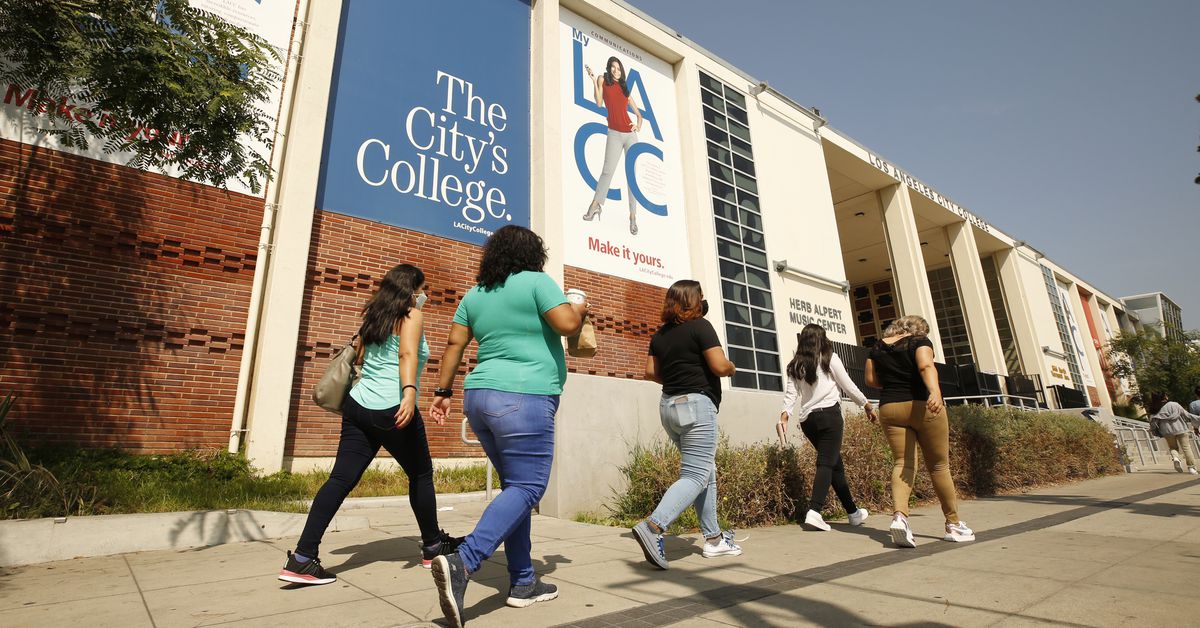
President Joe Biden’s promise to offer tuition-free community college to students across the country — a plan he said would boost the middle class and help the United States compete with other countries — fell through late last month as his administration scaled back its sweeping $3.5 trillion social safety net bill to $1.75 trillion.
The plan would have spent $45.5 billion for states to offer two years of free community college tuition to every student for the next five years.
College tuition has risen dramatically in the past few decades. The average student receiving the Pell Grant, a need-based federal program for low-income students, could only afford 41 percent of two-year public colleges, and just 23 percent of four-year public colleges, in the 2018-19 school year.
And that’s before the fees, books, and room and board expenses students must cover, or the struggles that community college students face to stay in school as they battle housing and food insecurity, among other challenges.
Despite evidence that free tuition for community college can combat the affordability gap and lead to higher college enrollment and, ultimately, higher wages for low-income students and students of color, the plan had few champions in the face of other Democratic priorities. The bill will likely still include tuition assistance through expanded need-based financial aid, funding for historically Black colleges and universities, and money for workforce development programs, according to experts who spoke to Vox.
But the result illustrated a big problem for free college in America: Among most Democrats, the idea might be popular, but it’s just not a top priority when up against the likes of child care initiatives like universal preschool and the child tax credit.
Biden maintains that free college is one of his administration’s top agenda items. “I promise you — I guarantee it — we’re going to get free community college in the next several years, across the board,” Biden said at a CNN town hall last week, after the first reports that the plan was axed.
For now, free-tuition community college will just have to wait. But some advocates remain optimistic.
“It’s only the beginning of this movement, and so far it’s been robust,” said Michelle Miller-Adams, a political science professor at Grand Valley State University, researcher at the Upjohn Institute, and author of the book The Path to Free College: In Pursuit of Access, Equity, and Prosperity.
About one-third of all college students in America attend community colleges, which, since their creation in the early 20th century, have come to mostly serve working-class students — as well as students of color who are underserved by traditional four-year colleges.
In 2018, 55 percent of all Hispanic undergraduates, 44 percent of Black undergraduates, 45 percent of Asian undergraduates and 41 percent of white undergraduates were enrolled at community colleges. From 2015 to 2016, about 37 percent of students at two-year community colleges came from families earning less than $20,000 a year.
The affordability gap is only widening. A report from 2017 by the Institute for Higher Education Policy found that students from households that earned less than $69,000 a year could hardly afford to attend 1 to 5 percent of colleges in a pool of more than 2,000, even taking financial aid into account. Students from households making more than $160,000 a year could afford about 90 percent of the schools in the pool.
For 15 years, states and localities have led a grassroots effort to experiment with free tuition college programs, viewed as one solution to alleviate the burden of rising costs; at the same time, there’s been a national discussion about college affordability. In 2015, former President Barack Obama called for legislation to make two years of college free; Sen. Bernie Sanders (I-VT) has called to make all public colleges and universities free.
Nearly 20 states, from Tennessee to Michigan to California, already have some version of a free tuition college program, all developed within the last decade.
Tennessee was the first state to create one, Tennessee Promise, in 2015. After the program was created, community college enrollment increased, and the percentage of Black and Hispanic students at the state’s community colleges also increased.
These results have mostly held up, according to a recent report from the Tennessee comptroller’s office. The college-going rate increased from 58.6 percent to 64.4 percent between 2014 and 2015, in the first year of the program. In the three following years, the college-going rate decreased to 61.8 percent. The number of students who attended college in Tennessee from 2014 to 2017 increased by 15.3 percent, or about 5,400 students.
But between 2017 and 2019, the number of students who attended college decreased by 2.3 percent. Researchers concluded that the rise in the college-going rate is a result of the Promise program, meaning the initiative has a positive impact on enrollment — though not as significant as in its inaugural year. The same trend exists for retention at community colleges in Tennessee as a result of the program.
“It really was the sort of shock to the system that we needed in Tennessee and we discovered that the most vulnerable populations — low-income students, students of color, students who thought that college was never an option for them — are benefiting,” said Krissy DeAlejandro, executive director of TNAchieves, a scholarship and mentoring organization that brings high school students into the Tennessee Promise pipeline. “Going to college became the culture in Tennessee and we were talking about going to college with students in a way that we had never done before, and that is the magic.”
Other research shows that the benefits of free community college tuition outweigh the costs across the board: The programs contribute to higher completion rates for students and lower student loan default rates.
One randomized trial in Milwaukee that tracked students’ high school, college, and life outcomes for eight years found that free college enticed students who wouldn’t have otherwise gone to college and increased graduation rates. The researchers also conducted a cost-benefit analysis of multiple free college programs including in Kalamazoo, Michigan; Knox County, Tennessee; Pittsburgh, Pennsylvania; and Nebraska’s statewide program and concluded that the positive effect on college outcomes and future earnings is “much larger than the cost to society as a whole.”
Biden’s plan would have tried to entice more states into offering tuition-free college.
“Right now, whether you get to go to community college or a four-year college tuition-free depends on where you live,” Miller-Adams said.
States would have had to opt into the partnership. For the first year of the program the federal government would fund 100 percent of the grant, with funding decreasing by 5 percent each year. By the final year of the program, the federal government would cover 80 percent of the bill and states would pick up the remaining 20 percent. Each state would be given the same amount of funding regardless of how much they currently charge for tuition.
“The federal program would have at least offered the opportunity of a tuition-free path to community college to everyone in the nation. It would have been tremendously equalizing,” Miller-Adams said.
What states without free tuition programs are missing, DeAlejandro said, is the culture shift that emphasizes “college matters and that every student is college material.”
But ultimately, as the bill was put together, there were other priorities that were higher, like universal pre-kindergarten. Biden needs the votes of all 50 Democrats in the Senate. Sens. Joe Manchin (D-WV) and Kyrsten Sinema (D-AZ) have slowed the progress of negotiations. Manchin said he supports means-tested programs and has said he wouldn’t back free tuition community college for all students.
In the short term, what free tuition advocates have to look forward to are concessions like an increase in the maximum Pell grants, which help low-income students attend college, and funding for HBCUs, Hispanic Serving Institutions (HSIs), Minority Serving Institutions (MSIs), and Tribal Colleges and Universities (TCUs) — measures that matter, but don’t send the same kind of clear, impactful message as “free college.” The administration will invest in community college workforce programs, industry training, and apprenticeships, according to the latest framework, though specific funding commitments are yet to be announced. On the broader education front, lawmakers also plan to expand preschool access for six years for 6 million children.
DeAlejandro welcomes the increase in Pell grants. Students need more support to address housing insecurity and food insecurity, and to buy their books. Rural students in Tennessee can drive 30-40 minutes one way to get to class, so the doubling of Pell grants also helps out with gas money, she said.
With the rise in online learning, students have even tried to take classes using their phones, an obstacle that could be addressed with more Pell grant money, among others.
“I hope this doubling of Pell also comes with a message from states and local communities that we will work to ensure that every student has access to completing the FAFSA, because it’s intimidating and not always easy to complete,” DeAlejandro said.
Experts also hope that national leaders can recognize the importance of messaging for the next stage of the free college fight.
“What we’ve learned from Tennessee is that a very clear and simple message that college is affordable, and even tuition-free, brings a lot of people into the pipeline, rather than saying, ‘Oh, hey, you might be eligible for Pell grants,’” Miller-Adams said.
Why Biden’s Build Back Better plan doesn’t include free community college - Vox.com
Read More
Public school students get free meals. But a supplies shortage could affect that - NPR

For many public school districts, meals like this Mandarin chicken at Compass Elementary in Kansas City are the culmination of a kind of treasure hunt to source food. Frank Morris/NPR
American public school students are likely eating a lot more meals at school this year.
School food has been free for lower-income kids and some entire districts in the past, and it has been available for purchase to other kids, sometimes at a reduced cost. School districts are responsible for their own programs and are then reimbursed by the U.S. Department of Agriculture (USDA), primarily for the subsidized meals. This year, because of the pandemic, meals are free to all students, and the USDA is theoretically picking up the cost But shortages are crimping the program and costs are rising.
These meals include breakfast and lunch, and in some districts, dinner.
But labor issues are making that sustenance hard to find, triggering the worst supply chain headaches schools have faced in decades. Sourcing is a nightmare. Some staples of school dining, like chicken, can be hard to come by, and your kid's lunch might have to be served on a plastic nacho tray lid, according to nutritionists and school district officials NPR interviewed.
They say labor is the biggest issue. Food processing plants don't always have enough workers to keep production humming, trucking companies don't have all the drivers they need to haul food from factories, and companies that supply schools can't fully staff their warehouses.
School districts are high-volume, low-margin customers and many of them are now scrambling to feed their students.
"It's like a ginormous hurricane," says Grennan Sims, the director of nutrition services at the Hickman Mills School District in Kansas City. "And it keeps coming at us."
Sims' distribution companies are choosing to serve more profitable customers, rather than some school districts. The company her district used for years, Kohl Wholesale, started canceling truckload deliveries early this school year and cut ties with the district altogether soon afterward. Other large distributors have done the same to districts around the country, leaving people like Sims with thousands of students to feed and no clear way to buy all the groceries they need.

Grennan Sims, director of nutrition services for the Hickman Mills School District in Kansas City, is proud of the work she and her staff are doing to cobble together meals for the district's 5,600 students. Frank Morris/NPR
Every meal cobbled together is the culmination of a kind of treasure hunt
"If you think about when the world kind of shut down in March of 2020, and the months that came after that, and the empty shelves that were experienced, what people saw then is what we're seeing now, but it's just exponential," Sims says.
Now every meal Sims and her staff cobble together is the culmination of a kind of treasure hunt for the district's 5,600 students; a volunteer's vanload of chicken straight from a processing plant here, a box of donated utensils there, a new supplier gradually taking up part of the slack, but no certainty. And this is happening nationwide.
"We are hearing from schools all over the country that just aren't receiving the foods and supplies that they ordered," says Diane Pratt-Heavner, with the School Nutrition Association.
Pratt-Heavner says that some districts scrambling to feed kids are shopping at Costco, Sam's Club or regional restaurant supply depots. And she says they're paying more. Not necessarily more for identical items, but more money to fill in the gaps that they need to complete their menu. They can't get the same products they have been using. For example, in Sims' school district, she says the chicken she is able to source regularly has more than doubled in price.
Pratt-Heavner notes that most districts haven't fully tallied costs, as they are kind of in survival mode.
"It's been so fast and furious trying to reorder substitute items that they're not even looking at the price, it's more a matter of what can they get. They have to have trays or entrée items or fruits or vegetables — they're going to order whatever it takes," Pratt-Heavner says.
The U.S. Department of Agriculture is helping to pick up the added costs. The USDA is reimbursing districts for school meals at about 15% higher than the normal rate. It's announced that another $1.5 billion in aid is forthcoming but hasn't spelled out how that will be distributed. The agency is also easing regulations.
But Pratt-Heavner says she does not believe that the added money from USDA is covering all the additional costs that schools are carrying.
Meanwhile, the USDA hasn't released dollar totals for exactly what all this is costing, partly because of the lag time in collecting information.
"We absolutely want schools to serve the most nutritious meals possible. And we believe they want that too, but we also believe that no school should be penalized if the truck doesn't show up and they don't have the fruit cup to put out that day," says USDA Food and Nutrition Service Administrator Cindy Long.
There's no relief in sight
Some districts may have fruit, but not the cup, or the five-compartment tray on which to serve it. Lori Drenth, director of Food and Nutrition Services for the Hernando County School District in Florida, says the five-compartment tray was — until lately — the foundation of every meal. Normally the district goes through about 5 million of them annually, but this year Drenth is scrambling to find substitutes.
"I mean, seriously, I spend my days combing the internet for what can I put, what can I serve things, uh, menu items to students on," Drenth says.
By serving food on nacho bowl lids, pizza slice boxes, little deli meat trays and 9-inch Styrofoam plates, she's getting by. She says she'd like to go back to the reusable plastic trays many people remember from the school cafeteria. But even if she had the trays, she doesn't have extra people to clean them because in addition to the shortage of food and disposable serving products, Drenth, like many other school nutritionists, is dealing with a serious labor shortage of her own.
"There's just an endless overcoming," laments Drenth. "Whether it's, you know, paper goods or staffing, or pay or food, it can be exhausting."
And there's no relief in sight. Drenth and others expect the nonstop chaos of cobbling together menus on the fly to continue at least through the end of the school year.
Public school students get free meals. But a supplies shortage could affect that - NPR
Read More
Messi hurt by Barcelona exit: Laporta 'Inappropriate' over play for free claims - ESPN
Lionel Messi says it was inappropriate for Barcelona president Joan Laporta to say he could have played for free but has suggested he would have been willing to accept a bigger pay cut to stay at Camp Nou.
Messi, 34, accepted a salary reduction of 50% in the summer but Barca were still unable to register him with LaLiga due to their spending limit for the season being cut to €97 million, almost €300m less than last year.
Speaking in October after Messi had joined Paris Saint-Germain on a free transfer, Laporta said he'd hoped right up until the last moment the Argentina forward would offer to play for free.
- Stream ESPN FC Daily on ESPN+ (U.S. only)
- ESPN+ viewers' guide: LaLiga, Bundesliga, MLS, FA Cup, more
"The truth is, as I explained when I left, I did everything possible to stay," Messi told SPORT in an interview published on Monday.
"Never at any moment did they ask me to play for free. They asked me to reduce my salary by 50% and I did it without any problem. We were willing to help the club more. My desire and that of my family was to stay in Barcelona.
"No one asked me to play for free, but at the same time the president's words were inappropriate. It hurt because I don't think there was any need to say that.
"It's like taking the ball from you and not accepting the responsibility or taking charge of things. That makes people think and generates doubts that I don't think I deserve."
A leak earlier this year revealed Messi's final contact with Barca was worth a potential €555m over four years, although he didn't earn that much in the end as it was dependent on bonuses. He also gave up part of his wage during the pandemic.
His gross annual salary, after loyalty bonuses and signing-on fees, was around €70m.
Messi had always maintained a good relationship with Laporta since breaking into Barca's first team during his first spell as president, between 2003 and 2010. Laporta, in part, was re-elected in March because he boasted of being the candidate most likely to keep Messi, whose contract with Barca expired on June 30. 2020.
However, Messi says he has now not spoken with Laporta since leaving Barca in August. ESPN revealed at the time that the days leading up to Messi's departure had taken their toll on the duo's relationship.
Despite that, and his grievances with the previous president Josep Maria Bartomeu, Messi still loves the club and says it remains his plan to return to Barcelona in the future.
"I don't know if I will [go back] when my contract expires in Paris," he added. "But what is almost certain is that we're going to return to live in Barcelona and our life will be there.
"I have always said that I would love to help the club and be useful. I would love to be a sporting director at some point. I don't know if it will be in Barcelona or not. Or if it will be something else.
"If there's the chance, I would like to go back and contribute what I can because it's the club I love and I would love them to keep doing well, growing and being one of the best in the world."
Messi, who scored 672 goals in 778 games for Barca, both of which are club records, has not had a straightforward start to life in Paris. He's without a goal in five league games so far, although he has scored three times in three Champions League outings.
Messi hurt by Barcelona exit: Laporta 'Inappropriate' over play for free claims - ESPN
Read More
Indiana Pacers: 3 free agent point guards to fix playmaking woes - 8 Points, 9 Seconds

As if the Indiana Pacers’ ugly start to the season cannot be any worse, the injury to starting point guard and leading scorer and facilitator Malcolm Brogdon has exploited the team’s dearth of floor generals who can hold down the fort with the significant minutes suddenly left available.
Their losses to Brooklyn and Toronto, sans Brogdon, all but highlighted their vulnerability at the position, with both games culminating in the Pacers registering their lowest-scoring outputs in the early going to begin their campaign.
With Malcolm Brogdon sidelined, the Indiana Pacers have a glaring weakness at the point guard position
TJ McConnell, the Pacers’ sixth man and backup point guard, has been wayward from the jolt of energy that he has been last season. His lack of a reliable three-point shot and off-ball value has drastically limited Indiana’s scoring ceiling with him in the starting unit.
Brad Wanamaker, the third-string playmaker, has failed to impact the game on virtually all departments, falling short as a scorer with his missing three-point stroke while getting blown by on defense on multiple occasions by younger opposing guards.
As the Pacers seek to turn their season around quickly, their need for a reliable point guard who can provide a much-needed boost on scoring and playmaking is increasingly staring them right in the eye. Fortunately, the free agent market still houses some players who can give Indiana a hand. Here are three free agent point guards whom the Pacers should consider making a move for.
Indiana Pacers: 3 free agent point guards to fix playmaking woes - 8 Points, 9 Seconds
Read More
Bangkok welcomes first tourists for quarantine-free holiday - Reuters

BANGKOK, Nov 1 (Reuters) - Hundreds of vaccinated foreign tourists are scheduled to arrive in Bangkok on Monday, the first wave of visitors to Thailand in 18 months who will not have to undergo quarantine for the coronavirus.
Seeking to resurrect its pandemic-ravaged tourism economy, Thailand's government has given the green light to vaccinated tourists from more than 60 countries, including the United States and China.
Several European countries are also on the list as officials hope to capitalise on travellers from the northern hemisphere escaping the winter blues.
Thailand, one of the Asia-Pacific's most popular tourist destinations, has for the past 18 months enforced strict pandemic entry rules that have been criticised in the travel industry for being too restrictive and onerous.
Before the pandemic, tourism accounted for about 12% ofThailand's GDP and its capital city was the world's most visited city. The crisis has cost Thailand about 3 million tourism-dependent jobs and an estimated $50 billion a year in revenue.
Thai officials tested the waters with the reopening of the resort island of Phuket in July, allowing fully-vaccinated tourists to skip the then-mandatory two-week quarantine provided they stay on the island, where tourism accounts for 90% of the local economy.
However, the "Phuket Sandbox" was less popular than officials had hoped, with arrivals to the island in July at just 1% of pre-pandemic levels.
Under the new national programme, arrivals must spend their first night in a pre-approved hotel and receive a negative COVID-19 test before they are able to travel freely to rest of the country.
Airlines have rushed to ready the country for the hoped influx of visitors, bringing jets back from hibernation. Still, the return will be relatively slow. The finance ministry predicts just 180,000 foreign arrivals this year and 7 million next year, compared with some 40 million in 2019.
The majority of Thailand's 1.9 million infections and more than 19,000 coronavirus-related fatalities have been recorded since April. Around 42% of the 72 million population has been vaccinated.
Writing by Chayut Setboonsarng; Editing by Jane Wardell
Our Standards: The Thomson Reuters Trust Principles.
Bangkok welcomes first tourists for quarantine-free holiday - Reuters
Read More
COLUMN: A Place to Fall and Be Free - Volume One
This last week, I turned 30.
Surely I know that to some, this decade milestone should still make me feel young, spry, and full of life, but to a younger version of myself it’s an age even beyond what I pictured when I said those infamous words, “someday when I grow up …”
In celebration of my third decade, my husband and I took a trip north to Duluth to visit some close friends. On the morning of my actual birthday, we found ourselves wandering up to Gooseberry Falls State Park. After a scenic drive along the lake, we tagged along with the late-season leaf peepers and made the trek through crunching leaves to find ourselves (panting) on top of some autumnally scenic falls. Real desktop picture level views. Blended colors of burnt auburn and gold slowly devouring the fading green – a true sign that the seasons were changing. After a few hilarious jokes about who would be pushing whom over, I found a flat rock close enough to the falls that I felt my heart keep rhythm with the rushing waters.
”
The falls have aged, too. Over time, they’ve eroded and cracked, expanded, frozen over, maybe even dried up, and yet, they are still doing exactly what they’re supposed to be doing.

SARAH JAYNE JOHNSON
It is hard to not be introspective on your birthday, especially when it marks a new decade. As I sat, I thought about how quickly my years – especially the most recent one – seemed to fly beyond me. The sand in my hourglass, it seemed, was heavier than ever. I thought about how inconsequential it must be to exist only for people to marvel at you – to solely serve as a backdrop to those willing to make the hike. Mostly, as one does, I thought about my shortcomings: Have I done enough? Have I wasted time? Should I be more of a “30-year-old”? Should I take time to actually figure out what collagen is? As I stewed, I looked again to the falls beside me. Rhythmic ripples swirling through the water only to fall and foam at the bottom and settle. It’s then I realized, the falls have aged, too.
Over time, they’ve eroded and cracked, expanded, frozen over, maybe even dried up, and yet, they are still doing exactly what they’re supposed to be doing. They still exist in their little part of northern Minnesota – leaf peepers or not.
I began to see the laugh lines on my face in the ripples of the water. I saw friends to guide me in the surrounding trees, and friends I’ve lost along the way in scattered branches on the ground. I saw my family in the serene, soft swishing of the fresh foam, helping me find my calm after spiraling off the falls. In all the rocks the water ran through, I saw the first boy I slow danced with, and my first dance at my wedding. I saw the colors of all 30 of my Octobers rustle in the whisper of a wind that comes and goes. A View-Master of a short life, long-lived through vivid snapshots. Pictures that kept me afloat.
I’ve been 30 for nearly three whole days now and boy, do I have a lot of wisdom. Like that maybe my 30s are for recognizing that I too have a place amongst the woods. A place to fall and be free, and a place to simply be still in my own shortcomings. A place to be grown up.
After one last feel of the cold water, I grabbed my husband’s extended hand and left my rock. It was time to keep flowing.
COLUMN: A Place to Fall and Be Free - Volume One
Read More
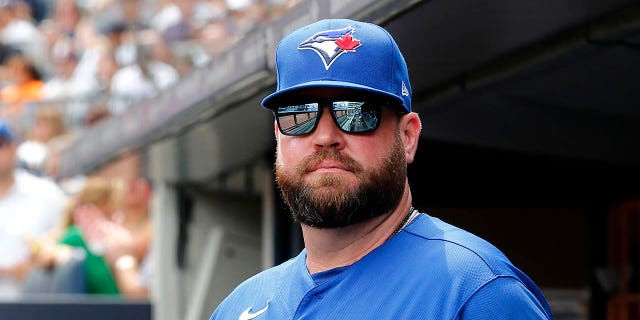
Blue Jays manager John Schneider saves woman choking at lunch, given free beer by restaurant - Fox News
Toronto Blue Jays manager John Schneider sprung to action when he saw a woman choking on food while at a lunch with his wife near the team’...
-
In the year since Victoria Jayne placed four community refrigerators across Philadelphia with free food, she has been amazed at how quickly...
-
San Francisco Postcard January 31, 2022 Issue Keeping the Streets of San Francisco Dealer-Free by Day In San Fr...
-
BrandGOV has expanded its COVID testing program to a new site in Suisun City. Rapid, 15-minute antigen tests are now available every Monda...


