Rechercher dans ce blog

Tuesday, October 4, 2022

Hospital System to Refund Poor Patients Who Were Entitled to Free Care - The New York Times

Providence began reaching out to more than 700 patients after The Times contacted the hospital system about its billing and debt-collection practices.

One of the country’s largest nonprofit hospital chains, Providence, will refund payments made by more than 700 low-income patients who were wrongly charged for medical care that should have been free.

The patients qualified for Medicaid, the government health insurance for people with low incomes, but were nonetheless billed for health care and then referred to debt-collection firms. The practice was the result of a program, known as Rev-Up, that was designed to maximize revenues by wringing as much money as possible from patients — even those whose incomes were so low they should never have been billed at all.

Rev-Up, which Providence created with the help of the consulting firm McKinsey & Company, was the subject of a New York Times investigation last month.

Providence began reaching out to the patients in late September, weeks after The Times asked the hospital system to comment on its billing and debt-collection practices, according to Melissa Tizon, a spokeswoman for Providence. She said the hospital system, which is not disclosing the total amount of money it is refunding, had been planning to issue the refunds for months.

In February, Bob Ferguson, the attorney general of Washington State, sued Providence, accusing it of violating state law in part by deploying debt collectors to go after more than 55,000 patient accounts. Providence is fighting the lawsuit.

Under state law in Washington, where Providence is based, hospitals must provide free care to patients whose income falls below 300 percent of the federal poverty level, or about $83,250 in annual income for a family of four. The group typically includes anyone who qualifies for Medicaid, and, until 2019, Providence waived all medical costs for people covered by the program.

That year, Providence — which operates 51 hospitals and more than 900 clinics across the country — changed its practices and began sending Medicaid patients to debt collectors, The Times reported last month.

Ms. Tizon blamed an “unintended error” that occurred when Providence was updating how it identified those eligible for charity care, “causing some Medicaid patients to receive collection notices.”

Ms. Tizon said Providence was reaching out to about 760 patients who qualified for Medicaid but were wrongly billed. She said the hospital system would repay their costs and interest, and work with credit-reporting agencies to “reverse any negative impact on credit.”

Last week, Gregory Hoffman, Providence’s chief financial officer, sent a message about the Times investigation to employees.

“As I read the story, I did not recognize the organization that was being described because it is not the organization we serve. I am sorry you had to read it,” he wrote. He added that Providence would reach out to “each of the patients featured in the article to talk with them about their experience and ensure they have the financial assistance they need.”

Providence also purchased full-page ads in The Oregonian and The Seattle Times newspapers that promoted its charity-care practices. The ads ran on the same day that The Times published its investigation.

The article prompted calls for action from state and federal lawmakers. Dr. Lisa Reynolds, an Oregon state representative, said her state’s attorney general should look into Providence’s collection practices there.

Senator Patty Murray, the Washington Democrat who chairs the Senate’s health committee, sent a letter to Providence’s chief executive, Dr. Rod Hochman, expressing concern about The Times’s findings and inquiring about Providence’s collection practices.

Ms. Tizon said on Tuesday that Providence was preparing a response to Ms. Murray’s letter. She added that the hospital system offered to meet with the senator in February, after the state’s lawsuit was made public, but that Ms. Murray did not respond. “She has, however, reached out several times to Providence leaders asking for campaign contributions,” Ms. Tizon said.

Adblock test (Why?)


Hospital System to Refund Poor Patients Who Were Entitled to Free Care - The New York Times
Read More

Monday, October 3, 2022

EXCLUSIVE: The Maggie Haberman Book Excerpts Trump’s Enemies Don’t Want You to See - Washington Free Beacon

These shocking passages from 'Confidence Man' will blow your mind

• October 3, 2022 2:30 pm

Journalists (and other Democrats) are pouncing and seizing on the leaked excerpts from Confidence Man, the forthcoming book about former president Donald Trump by New York Times reporter Maggie Haberman. The book doesn't come out until Tuesday, but you can read all about it in articles like this one from New York magazine: "Bonkers Revelations From Maggie Haberman's Trump Book, Ranked."

Trump's enemies couldn't be happier. It goes without saying that many of them suffered irreversible brain damage between 2015-2020. These days the only thing that brings them any comfort is reading new articles about Donald Trump, getting worked up about it, and lashing out on social media. They need those book excerpts the way Hunter Biden needs a smoldering crack pipe and a caravan of Russian hookers.

Alas, they probably aren't going to like the following excerpts from Confidence Man, which were exclusively obtained by the Washington Free Beacon from a source close to the subject of the book. They portray Trump in a remarkably different light than the supposedly "bonkers revelations" leaked to mainstream media outlets. Here are three of the most compelling passages from Haberman's reporting that you won't find anywhere else:

1) The plot 

The team of medical experts watched in awe as the White House physician instructed Trump to repeat the list of words in order. "Person, woman, man, camera, TV," the president said, his voice oozing with charisma. Trump would boast to aides about the "awkward silence" in the examination room as the brain doctors struggled to comprehend what they'd just witnessed.

Unbeknownst to Trump, that now-infamous cognitive test would prompt a series of secret meetings between academic experts and senior intelligence officials to determine the course of America's future. "I've never seen anything like it," one leading cognitive scientist said in an encrypted group text to high-level operatives. "It's the highest score I've ever observed in my career. BY FAR. I didn't think it was possible to be that smart, but science never lies. Let's meet tomorrow to discuss."

Experts were flown in from around the world. One of America's most respected historians, who asked to remain anonymous for fear of reprisal, described telling the group—which called itself "Project Zeus"—that Trump had already amassed enough accomplishments during his first term to go down in history as one of the most successful (and most unfairly treated) leaders in the country's history. "Except for Lincoln," the historian recalled. "Maybe."

Project Zeus ultimately arrived at a consensus: Trump's preternatural intelligence was a clear and present danger to the country. He must not be allowed to win reelection in 2020. They hatched a plan to rig the presidential contest in favor of Joe Biden, whom they viewed as a malleable simpleton whose rapidly deteriorating health would make him easy to control. "We stole the election, plain and simple," said a former FBI official with knowledge of the anti-Trump conspiracy.

2) A perfect love

The First Lady's public persona—reserved and soft-spoken supermodel—was just an act. Trump's aides in the White House often went out of their way to avoid Melania, who had a habit of cornering people to boast in great detail about her husband's prowess in the bedroom. On at least one occasion, a group of junior staffers hid for nearly half an hour in the White House freezer, huddling together for warmth, to spare themselves another conversation about the commander in chief's unprecedented capacity for passionate lovemaking.

"I thought I was going to lose a foot to frostbite," one aide said of the incident, which occurred around the time of Trump's first impeachment trial in December 2019. Multiple aides and allies confirmed that Melania was especially eager to discuss the president's notorious phone call with Ukrainian president Volodymyr Zelensky. "She'd ask you how your day was, and then immediately start talking about the call and how she insisted on playing it in the bedroom to set the mood," another former White House aide recalled. "She'd say: ‘It really is perfect, like my Donald.' TMI, you know?"

3) The truth will set you free

Days after the 2020 election, which Trump had come to suspect had been rigged by a secret cabal of deep-state operatives, an envelope appeared on the Resolute desk. The president noticed it one day while drinking a Diet Coke and thinking about all the documents he wanted to declassify. Inside was a piece of paper certifying the birth of "Barack Hussein Obama II" at Mombassa Hospital in Kenya on August 4, 1961.

Trump convened a meeting with senior intelligence officials, who were able to verify the document's authenticity with "100 percent certainty," according to three high-ranking operatives with knowledge of the situation. The officials turned to the president, eager to know what he planned to do next. Trump, who has never shared this information with anyone, sighed thoughtfully as he considered the implications of this bombshell. "You know what?" he said, according to multiple sources in the room. "Let's just pretend this never happened. It wouldn't be good for the country. We're too divided and the temperature's too high, okay? I was right all along, and that's enough for me. Burn it."

So they did.

Adblock test (Why?)


EXCLUSIVE: The Maggie Haberman Book Excerpts Trump’s Enemies Don’t Want You to See - Washington Free Beacon
Read More

Hundreds receive free care at annual OHSU health fair - OHSU News

A man gets his eyes checked at the OHSU Casey Eye clinic booth at the Health Equity Fair.

Vision health patient Timothy Merrifield is blind in his left eye and loves to read. He stopped by the vision care booth to get his vision checked and to see about getting some new glasses. (OHSU/Christine Torres Hicks)

The 2022 Health Care Equity Fair offered Timothy Merrifield a welcome opportunity to receive a free eye checkup.

Merrifield loves learning about other’s lives through biographies. But his up-close vision has recently worsened, and he develops headaches whenever he tries to read.

A friend at a low-income apartment building in downtown Portland recommended he come to the annual fair, which Oregon Health & Science University students have organized for more than a decade to help improve health care access for local residents.

“This event came at a good time,” Merrifield said as he briefly waited for volunteers from the OHSU Casey Community Outreach Program and the Pacific University EyeVan to assess his eye health and connect him with a free pair of glasses. “I need glasses to read.”

The eye health station was one of dozens scattered under tents at Portland’s Pioneer Courthouse Square on Sunday, Oct. 2, for the annual fair. Other free services offered at the event included flu and COVID-19 vaccinations, foot care and soaks, haircuts, showers and veterinary checkups for pets.

The fair began in 2009as a health screening fair that OHSU students organized as one of several local events that marked a national, week-long awareness campaign focused on the challenges faced by those who don’t have health insurance.

Gina Miller, M.D., was among the medical students who organized the first health screening event in 2009. Having graduated from OHSU in 2011, she was surprised to learn recently that the event she helped start is still going. Miller, who is now a family medicine physician in Lebanon, Oregon, helped students organize this year’s fair.

“I’m really proud of this,” she said as students took blood pressure and weight measurements at the nearby primary care tent. “It’s almost overwhelming how big it’s gotten, and how much work the students put into making it happen every year.”

From left to right are the four student organizers for the 2022 Health Care Equity Fair: M.D./M.P.H. student Ali Lokhandwala, M.D. student Sydney Lashley, M.D./M.C.R. student Lisa Kumasaka, and M.D./M.P.H. student Tamana Ebrat. (OHSU/Christine Torres Hicks)

From left to right are the four student organizers for the 2022 Health Care Equity Fair: M.D./M.P.H. student Ali Lokhandwala, M.D. student Sydney Lashley, M.D./M.C.R. student Lisa Kumasaka, and M.D./M.P.H. student Tamana Ebrat. (OHSU/Christine Torres Hicks)

Current OHSU students who organized the 2022 fair – co-led by M.D. student Sydney Lashley, M.D./M.C.R student Lisa Kumasaka, M.D./M.P.H. student Ali Lokhandwala and M.D./M.P.H. student Tamana Ebrat – explained why the event is still needed 13 years later.

“Portland has a major housing crisis that affects the health and well-being of anyone who is experiencing homelessness, or anyone who can’t afford health insurance because of the rising cost of housing,” Lokhandwala said.

“Socioeconomic status can sadly determine our health,” Ebrat added, referring to low incomes preventing some from receiving needed health care. “We hope OHSU students can keep organizing the Health Care Equity Fair until health care is accessible by all.”

For a gallery of downloadable photos, click here.

Adblock test (Why?)


Hundreds receive free care at annual OHSU health fair - OHSU News
Read More

It's not just any Taco Tuesday: Here's where to get free food, deals on National Taco Day - USA TODAY

Saturday, October 1, 2022

Free Crocs giveaway 2022: Enter Croctober contest for free shoes through Oct. 7 - Axios

Crocs, a favorite brand of Gen Z, is giving away free pairs of shoes in a contest to mark the brand's 20 years.

Why it matters: A new Morning Consult survey found the footwear company is more popular with people ages 18-25 favor Crocs than even their closest elders, particularly millennials, with whom they're often lumped in, Axios’ Jennifer A. Kingson reports.

Driving the news: Crocs renamed the month "Croctober" and said it will give away “tens of thousands of pairs” of its shoes each day Saturday through Oct. 7.

Details: The contest is open to enter from 10am to 3pm ET daily on Crocs website for a chance to win a Classic Lined Tie-Dye Clogs, the company told Axios.

  • Entries can also be made through the Crocs app.
  • Winners will be chosen randomly and “will be notified by email within 12 hours of the draw closing,” the Croctober page notes.

Between the lines: You need to have a free Crocs Fans account and also need to create an account with EQL, who is managing the contest.

Of note: The system requires “submission of payment information“ for winners but Crocs told Axios “giveaway winners will not be charged anything.”

Flashback: Crocs has given away around 1 million pairs of shoes to health care workers in the last three years through its “Free Pair for Healthcare” program that began in spring 2020 amid COVID.

What's next: The brand said there will be "surprise giveaways," product launches and collaboration releases throughout the month.

  • The made-up holiday of Croc Day is Oct. 23 and a limited-edition Croc Day Clog will be released to Crocs Club members Oct. 20 and to everyone Oct. 21.

More from Axios:

Adblock test (Why?)


Free Crocs giveaway 2022: Enter Croctober contest for free shoes through Oct. 7 - Axios
Read More

Boston Police Turn Blind Eye to Drug Use Outside Government ‘Harm Reduction’ Facility - Washington Free Beacon

Violence and crime rampant outside clinic that provides free syringes, crack pipes

Police outside AHOPE harm reduction facility in Boston
• October 1, 2022 4:59 am

BOSTON—The sidewalk surrounding the city government's so-called harm reduction facility in South Boston, which exists to make drug use safe, has devolved into a lawless safe haven for addicts who are free to inject dangerous drugs in plain sight of the city's police force.

The city's drug users congregate outside Access, Harm Reduction, Overdose Prevention, and Education (AHOPE), the Boston Public Health Commission's harm reduction facility, to pick up free drug paraphernalia such as syringes and crack pipes. The Washington Free Beacon saw several users inject in front of the building, where an officer sat inside a parked police car. Remnants of pipes, syringes, and drug capsules filled the cracks in the sidewalk. Security guards at a next-door homeless shelter said police monitor the area to counter violence—which erupts daily between addicts—but otherwise overlook public drug use.

"All the time—violence," one security guard told the Free Beacon.

So far this year, Boston police have made 29 arrests for aggravated assault on the one-mile street outside the AHOPE facility, which neighbors the Boston University Medical Campus and Boston Medical Center, according to police data. Police have also made arrests for 12 robberies, 5 auto thefts, 23 warrant arrests, and 32 "sick assists"—8 of which for "drug-related illness." While Boston police also made 44 arrests for "drug possession/sale manufacturing/use," it is unclear which specific charge was the cause for each arrest. Police officers declined to speak with a Free Beacon reporter on site, and the Boston Police Department did not respond to a request for comment.

The disorder outside AHOPE provides a case study in how the Biden administration's controversial harm reduction approach to drug policy—which aims to make drug use safer for addicts rather than prevent it—can facilitate crime and dangerous drug abuse. The Department of Health and Human Services launched the nation's first federal harm reduction program in May, doling out $30 million in grants to organizations to distribute drug paraphernalia such as syringes and "smoking kits," which often include crack pipes. The White House claimed these funds would not go toward pipes, but several grant recipients distribute the drug supplies, according to a Free Beacon investigation.

Aside from clean pipes and syringes, harm reduction groups such as AHOPE also distribute fentanyl test strips, Narcan, and disease testing, which are intended to mitigate the health risks of drug abuse. Outside the Boston harm reduction facility, however, roughly a dozen drug users each day are rushed to the Massachusetts General Hospital for treatment after they show signs of an overdose, the security guards said.

While the area outside the facility is a de facto harbor for illicit drug use—one drug user said addicts naturally migrate there because of the free drug paraphernalia—formalized injection sites are illegal under federal law. The Biden administration is preparing to declare such injection sites legal, the New York Times reported in July, which would allow people to use drugs with oversight from medical professionals to help prevent overdose deaths. The Trump administration struck down an attempt to open an injection site in Philadelphia, but that decision is set to be overturned by the Justice Department. Injection sites currently operate in New York City.

Two trash cans mark the area in front of the homeless shelter where drug use is prohibited. A woman is passed out next to the further trash can.

During one visit to the harm reduction facility, police officers cleared all drug users off the street after declining to speak to a Free Beacon reporter. One of the security guards said that he had only seen police remove everyone from the area "a couple times" since he began working there this year.

"[Police] allow them to shoot up," he said. "But not in front of buildings."

Police returned to remove drug users in front of the city-run harm reduction building.

"The good thing is we give them sleep and hope," the security guard added. "The bad thing is you keep the addiction prolonged."

The Boston Public Health Commission and Boston Health Care for the Homeless Program, which treats addicts after they overdose on public streets, did not respond to requests for comment.

Adblock test (Why?)


Boston Police Turn Blind Eye to Drug Use Outside Government ‘Harm Reduction’ Facility - Washington Free Beacon
Read More

Friday, September 30, 2022

Illegal Immigrants Plead Guilty to Smuggling Conspiracy That Killed Woman in Texas - Washington Free Beacon

Two Guatemalan men who illegally crossed the U.S.-Mexico border and led across other migrants pleaded guilty on Thursday in federal court to a conspiracy that resulted in the death of one migrant, the Department of Justice announced.

In August 2021, police arrested Armando Gael-Galicia, 26, and Jose Diego Tercero-Gonzalez, 22, after the body of a young Guatemalan woman was discovered near Odessa, Texas. The victim died in Gael-Galicia and Tercero-Gonzalez’s trailer, which also housed additional illegal immigrants. The defendants admitted on Thursday that they "operated a prolific alien smuggling organization and were responsible for the transportation of the migrant who died."

The case comes as the U.S.-Mexico border under President Joe Biden faces an unprecedented crisis. Two million migrants illegally crossed into the United States in this fiscal year, the Washington Free Beacon reported. Vice President Kamala Harris, whom Biden tasked with handling the crisis, has been to the border only once, with Democratic congressman Henry Cuellar saying that "it doesn’t look like she’s very interested in" the issue.

The case is connected to the indictments of other human smugglers who "facilitate the travel of large numbers of migrants from Guatemala through Mexico, and ultimately, to the United States, charging the migrants and their families approximately $10,000 to $12,000 for the perilous journey," the Justice Department said. Guatemalan authorities have arrested the other smugglers and are preparing to send them for trial in the United States.

Adblock test (Why?)


Illegal Immigrants Plead Guilty to Smuggling Conspiracy That Killed Woman in Texas - Washington Free Beacon
Read More

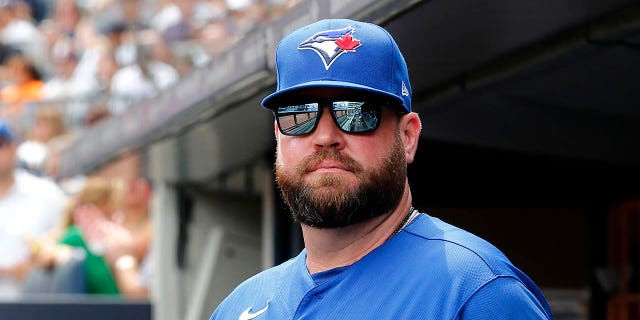
Blue Jays manager John Schneider saves woman choking at lunch, given free beer by restaurant - Fox News

Toronto Blue Jays manager John Schneider sprung to action when he saw a woman choking on food while at a lunch with his wife near the team’...